
As a result of the Covid-19 epidemic rapidly worsening, many schools found themselves in a unique situation of being forced to utilize remote learning. As the world proceeds forward, many schools may believe it is best to continue remote learning over in-person learning. However, remote learning does not come without its own problems. In order to effectively plan and implement a way of learning that best suits the needs of students and educators, we must first identify and contend with the issues of the current system in order to find the solutions.
It is Inaccessible and Does Not Accommodate All
Remote learning has many issues with not being able to adequately reach demographics that would normally be reached through in-person learning. More specifically, the groups of people found to be most vulnerable to remote learning are children who possess fewer resources such as internet access or devices and students with disabilities.
Resources
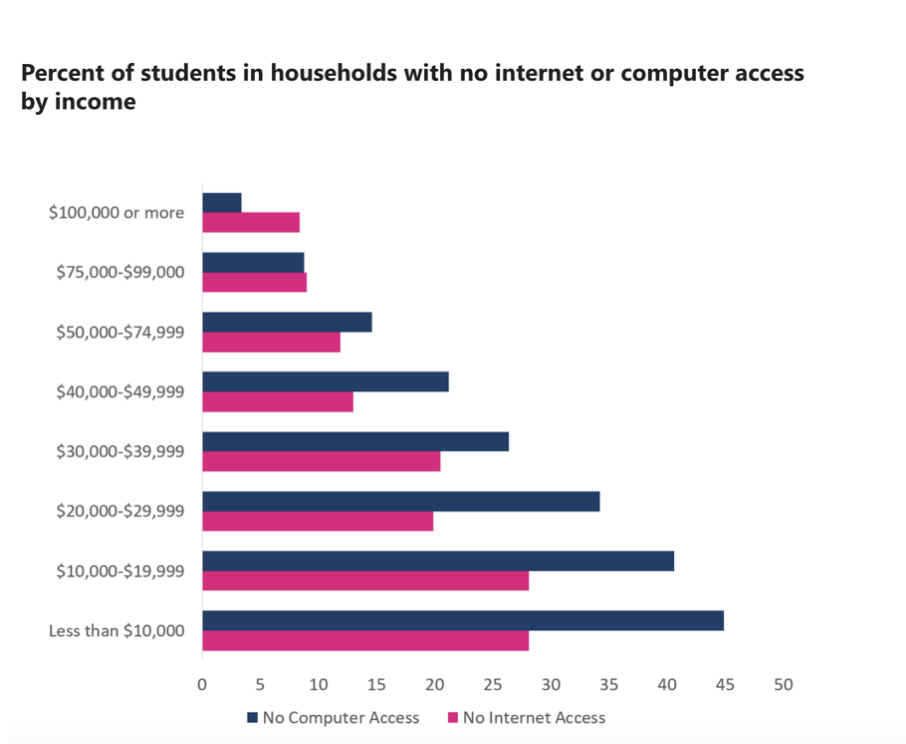
At Public School 22 in Staten Island, NY, 25% of the student population needed technological tools but were not given proper materials until a month after the original transition to remote learning. However, accessibly extends beyond merely owning technology. A grade school in Wales still found remote learning a difficult conversation of accessibility even after schools handed out more than 200 laptops to students with their government funding.
A survey by the National Center for Education Statistics reported that 34% of families simply cannot afford internet. As a result, 17% of students did not have a device in their home for learning. Out of 56 million K-12 students, 9 million students had difficulty completing schoolwork due to a lack of internet access.
Disabilities
The students and families of disabilities found the switch to remote learning disruptive to their learning with disabilities categorized as mental, physical, and/or genetic dysfunctions that severely impact a student’s ability to complete work. The needs of students with disabilities vary greatly between each individual but some include: visual, cognitive, physical, extra time for completion, and personal tutoring. Many children with disabilities have found remote learning a great set-back to their personal development and feel disproportionately affected by the lack of in-person learning. Students and parents struggle with no longer having caretakers and trained special education instructors with problems ranging from lack of personalized instruction to no longer having textbooks with narration. While some families have been able to hire home nurses and tutors, the majority of families are not able to afford those services.
Students Struggle to Create Structure Outside of the Classroom
In the wake of COVID-19, almost everyone’s daily structure has drastically changed. And, for some students, the ability to adapt and cope with this change was made more difficult due to the fact that important facets of students’ education and wellbeing are hard to recreate online. Specifically, the socialization of school and the importance of on-field learning were highlighted problems.
“I actually need my teachers, who know me and understand me, to help me, and I don’t have that,” she said. “I just keep thinking, ‘Oh, my God, I might not pass.’ I’m just really scared for the future.”
Socialization
Socialization between students and faculty is an essential element of school because it builds and develops relationships with peers and staff. In-person learning grants students the opportunity to build social skills, learn from their peers, and create professional and rewarding relationships with educators. During the shift to remote learning, many students lost that ability to network with their classmates and professors lost the ability to hold individual opportunities such as office hours.
Especially during an emotionally turbulent time, students need the reassurance of teachers, but as of recently many students have found themselves like Titilayo Aluko, 18, a junior at Landmark High School in Manhattan saying “I actually need my teachers, who know me and understand me, to help me, and I don’t have that,” she said. “I just keep thinking, ‘Oh, my God, I might not pass.’ I’m just really scared for the future.”
Engagement
In addition to the lack of socialization, many students found online learning to be distant and far less engaging than its in-person counterpart. Many students found themselves uninterested in learning after the change to online learning with some teachers reporting that less than half of their students regularly participated. And while chronic absenteeism has been a longtime concern of the US education system, this problem has only worsened with Los Angeles reporting that a third of their high school students did not log in for classes.
When looking at why students did not log into classes, many say that they found classes simply not worth it. With some professors merely assigning pre-recording lessons, students found themselves with no need to attend class. Students with certain majors that often require a higher level of on-field learning such as engineering and medicine, found online learning inadequate. Anna M, 19, a junior pre-med student at the University of Pittsburgh, states “the key to any kind of medical training is learning how to communicate with people. How am I supposed to learn without real volunteer experience? How am I supposed to learn anything from online lab simulations?”
Students are Subjected to Unsafe and Unstable Environments at Home
Lastly, for many students, it’s impossible to expect them to succeed in school when being forced to learn in an unsafe and unstable home environment. Scott Berkowitz, president of the Rape, Abuse, and Incest National Network (RAINN), states that schools were a safety net for minors struggling with abuse at home, but this safety had collapsed due to lockdowns. Students required to learn at home can face physical, emotional, and sexual abuse and food insecurity.
67% of these callers identified their perpetrator as a family member and 79% of callers were currently living with their abusers.
Abuse
According to RAINN, there was a rise of minors contacting the National Sexual Abuse Hotline with the end of March seeing a 22% increase in monthly calls. 67% of these callers identified their perpetrator as a family member and 79% of callers were currently living with their abusers. However, an often overlooked yet important role of an educator is their responsibility to report any signs of abuse to the authorities. Remote learning has decreased these important interactions between students and teachers and thus there has been a steadily declining reports of abuse from teachers. In the first eight weeks of spring 2019, New York City’s child welfare agency received an average of 1,374 cases of abuse or neglect to investigate each week. In the same period this year, that number fell to 672, a decline of 51%.
Food Insecurity
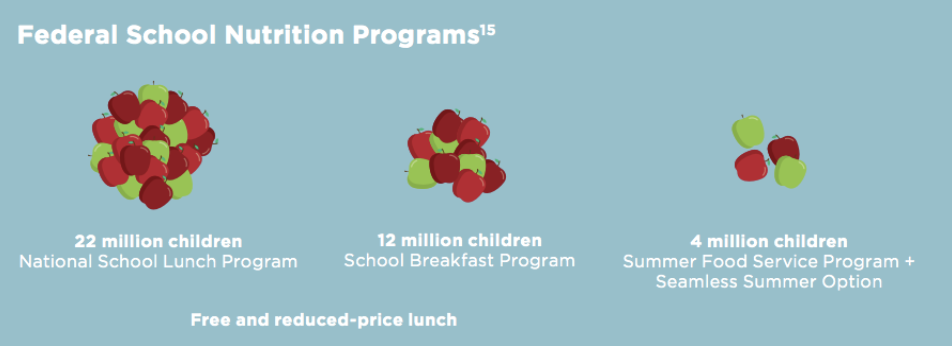
Feeding America estimates that 1 in 6 children suffer from food insecurity. While the FNS has responded to the pandemic, many children are still living in homes with inadequate food. During the school year, many families rely on food programs such as the National School Lunch Program and the Backpack Program. However, with remote learning, families are no longer able to access these resources. And with the unemployment rate continuing to rise, food insecurity will continue to be a growing problem.
One thing that must remain the primary priority in all of our minds is creating a safe and open environment
The upcoming academic year is rapidly approaching and our preparedness is vital to ensuring the success and wellbeing of our students. However, whether we choose in-person learning, remote learning, or hybrid learning one thing that must remain the primary priority in all of our minds is creating a safe and open environment. Schools have been a place for students to thrive creatively, socially, and academically and we must strive to continuously foster that growth.