
Introduction:
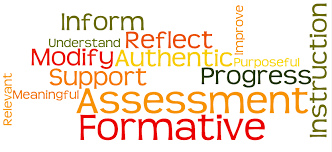
Prior knowledge is crucial to effective learning, and one effective strategy for gathering prior knowledge is formative assessment. It is important to assess students' prior knowledge before beginning a new unit and to provide frequent formative assessments throughout the unit to guide studying and adjust teaching. Pop quizzes and infrequent assessments that impact grades do not effectively aid learning. To retain knowledge, students should use it soon after encountering it. Creating their own formative assessments can be an effective study strategy. Teachers can play an important role in conducting high-quality observational and qualitative data.
Scenario:
You are a middle school teacher who is interested in improving your formative assessment techniques to better support your students' learning. You have noticed that your current approach to assessments is not providing enough feedback to your students, and you want to explore new strategies that will allow you to assess student learning in a more meaningful and frequent way.
In this lesson, you will learn the importance of assessing prior knowledge, how to implement frequent, low-stakes formative assessments, how to conduct high-quality formative assessments, and how to create opportunities for reflection and metacognitive thinking.
Lesson Objectives:
Develop an understanding of the importance of prior knowledge in learning, and learn how to effectively assess what students already know before starting a new unit through formative assessment techniques.
Learn how to implement frequent, low-stakes formative assessments in the middle of a unit to provide feedback to students and adjust teaching, and avoid high-stakes assessments that can impact grades and hinder learning.
Understand the role of observational and qualitative data in conducting high-quality formative assessments, and learn how to create opportunities for student reflection and meta-cognitive thinking to improve learning outcomes.
Assessing Prior Knowledge
Assessing prior knowledge is an essential step in the learning process. It helps teachers to understand what students already know and what they need to learn in order to achieve the learning objectives of a new unit. Effective assessment of prior knowledge can save time, reduce frustration, and increase the chances of success for both students and teachers.
Using formative assessment techniques such as pre-tests, concept maps, and KWL charts can help teachers to assess the current level of student understanding and identify any gaps in knowledge. Pre-tests, for example, can help teachers to gauge the students' knowledge before starting a new unit, while concept maps can help students to organize their existing knowledge and identify connections between different concepts. KWL charts can also help students to identify what they know, what they want to know, and what they have learned after completing the unit.
By assessing prior knowledge, teachers can tailor their teaching approach to the specific needs of their students, making the learning process more effective and efficient. It also helps students to build on what they already know, making it easier for them to understand and remember new information.
In summary, assessing prior knowledge using formative assessment techniques is crucial for effective teaching and learning. It can help teachers to identify knowledge gaps, tailor their teaching approach to the needs of their students, and help students to build on their existing knowledge.
Implementing Frequent, Low-stakes Assessments
Implementing frequent, low-stakes formative assessments is an important strategy to improve student learning outcomes. By providing regular opportunities for feedback, teachers can identify student understanding and address any knowledge gaps or misconceptions before they become major problems. These assessments can also help to motivate students by providing them with a sense of progress and accomplishment, as well as helping to build their confidence in their own learning abilities.
Using low-stakes assessments, such as exit tickets, peer assessments, and self-assessments, can provide a way for students to reflect on their learning without the fear of negative consequences, such as impacting their grades. This can help to reduce stress and anxiety in students, which can be a barrier to learning. In addition, low-stakes assessments can be used to adjust teaching strategies and provide immediate feedback to students, allowing teachers to tailor their instruction to the needs of their students.
Overall, implementing frequent, low-stakes formative assessments can improve student engagement, motivation, and learning outcomes. It is important for teachers to understand how to use these techniques effectively in order to provide the best possible learning experience for their students.
Conducting High-Quality Formative Assessments
Conducting high-quality formative assessments is important because it helps teachers identify student strengths and weaknesses, which in turn guides future teaching. Observational and qualitative data provide a rich and nuanced understanding of student learning that can't be captured by standardized tests alone.
Examples of observational and qualitative data include anecdotal records, student interviews, and think-aloud protocols. These techniques allow teachers to gain insight into students' thought processes and identify misconceptions, knowledge gaps, and areas where students are excelling. By using this information to adjust instruction, teachers can tailor their teaching to meet the individual needs of their students, resulting in improved learning outcomes.
In Conclusion
There are a lot of things that teachers can do to be more effective in their classroom. We have named a few of the most vital things above, but we have also included a list of “Do’s” and “Don’ts” below.
Do’s and Don’ts of Teaching:
The top 13 research-informed strategies every teacher should NOT be doing:
Pop quizzes for a grade
Starting a class by going over homework
Ending a class by teaching all the way to the bell
Coaching students to use passive studying techniques such as reviewing for a test by just rereading their notes or textbook.
Defining kids by an individual style, such as “this person is an auditory learner, or that person is a kinesthetic learner.”
Varying the modality of teaching to match these perceived individual learning styles.
Applying simple labels to students, such as “lazy” or “smart”, rather than making judgments based on observations.
Believing students have a fixed level of ability (despite their being in a time of great brain plasticity, able to work in ways that will require their brains to make them better learners and higher-achieving students).
Content delivery dominated by lecturing
Assessments dominated by tests, particularly multiple-choice tests.
Always being the sage on the stage and never the guide on the side.
Praising achievement rather than effort.
Not recognizing the connections between emotion, identity, and health to learning.
The top twelve research-informed strategies every teacher SHOULD be doing:
Class periods should be designed with an understanding that what students will recall most is what takes place in the first part of the class and what students will recall second most will take place in the closing minutes of the class.
Students should be given more frequent, formative, low-stakes assessments of learning.
Students need more opportunities to reflect, think meta-cognitively, on their learning and performance.
Students need to know that the pervasive way they choose to study is actually hurting their ability to learn for the long term and that self-testing is much more effective than reading one’s notes.
Students, parents, teachers, and school leaders need to understand that sleep is critical to memory consolidation. Without sufficient sleep we create a system that perpetuates the illusion of learning.
Students need to know that “effort matters most,” and that they have the ability to to rewire their brain to make themselves better learners and higher-achieving students (the concept of “neuroplasticity”).
Students need more, but well judged, opportunities for choice in their learning, which enhances engagement and intrinsic motivation.
Students need to love their limbic system and recognize the impact stress, fear, and fatigue have on the higher-order thinking and memory parts of their brain.
Students need opportunities to transfer their knowledge through the visual and performing arts.
Students need their teachers to vary the modality of teaching and assessment based on the content (as well as the time of day): What methods suit this topic best? What methods have I just used and will use soon so that I can provide a range of challenges? All students learn best when taught in a variety of modalities, and when the modality is chosen with the content in mind rather than the student.
Students need to know the anatomy of their brain, especially the role the pre-frontal cortex, amygdala, and hippocampus play in their learning.
Students need frequent opportunities during the school day to play.
Closing Activity:
Please respond to the lesson email with answers to the following questions, and one of our real estate mentors will respond with feedback.
Given what you’ve learned in this lesson, create a formative assessment about the do’s and don’ts of teaching. You can do this on Google Slides, Powerpoint, or any Platform you deem appropriate.
Advance your understanding by participating in the 24/7 Discussion Forum:
Please answer the following questions in the comment section below and interact with learners from around the world.
Discussion Question
Why is it important to assess prior knowledge before starting a new unit? How can formative assessment techniques help identify knowledge gaps and guide the learning process?