
Pedagogy
The concept of 'Pedagogy' encompasses the art and science of teaching, blending practical techniques with theoretical underpinnings. It is a reflection of a teacher's personal beliefs and educational philosophy, intricately interwoven with cultural contexts and a diverse array of instructional methodologies.
At its core, pedagogy involves a deep exploration of various teaching strategies and their impact on student learning. It is not merely about imparting knowledge; a thoughtfully crafted and effective pedagogical approach plays a pivotal role in fostering student success, facilitating deeper comprehension, and cultivating advanced cognitive skills.
In the realm of pedagogy, the emphasis is placed on thorough understanding rather than the rapid acquisition of knowledge. This approach necessitates a student-centric focus, where the principles of pedagogy are tailored to meet the unique needs and learning styles of students. It involves a dynamic interaction between teachers and students, where communication is key to enhancing the learning experience. Now, let's delve into the five foundational principles of pedagogy, each serving as a pillar in the construction of a rich and engaging educational environment.
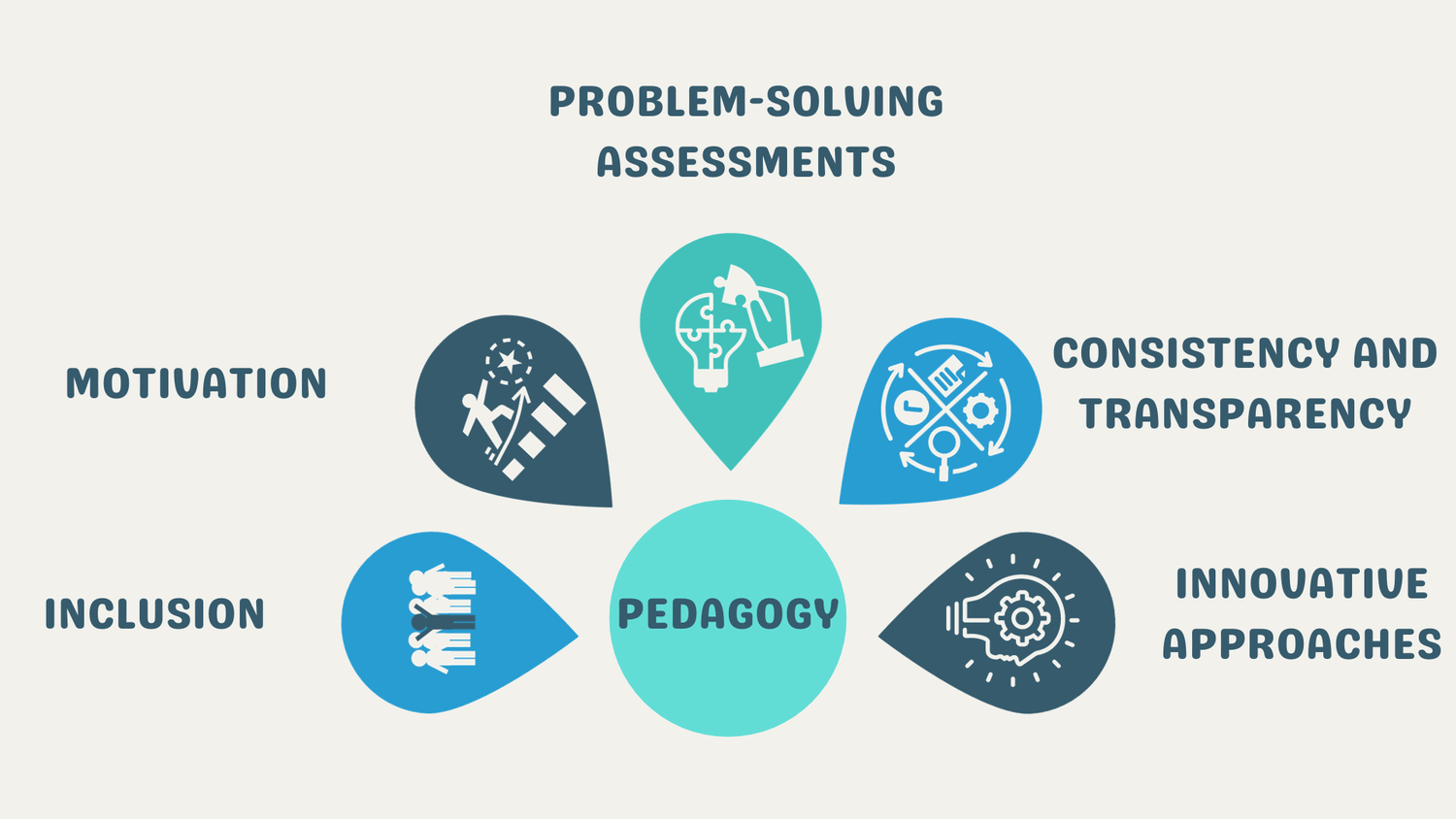
Inclusion - The pedagogy concept promotes an inclusive learning environment that benefits all students in the classroom. Rather than the educator teaching a class, the method focuses on each child as an individual, and they teach each student to understand the subject matter. It ensures that everyone has access to quality education regardless of their learning speed, and background.
Motivation - Students are more likely to be motivated to learn when teachers communicate with them to ensure they understand what they are learning. Educators can accomplish this by identifying students’ needs and interests. Use this information to lay a foundation for teaching students, making learning experiences more engaging.
Problem-Solving Assessments - The pedagogy model requires educators to ensure that students understand their courses and can apply them to solve problems. The only way to ensure that students truly understand the subject enough to solve problems is to create assessments that demonstrate how well the students understand the subject.
Consistency and Transparency - The learning experience must be holistic for students to understand and apply the knowledge gained from their classes. That is why teachers break down the subject into small units and teach it to students in bits and pieces, building on student's prior knowledge to make the topics relatable.
Innovative Approaches - To be effective, educators must approach teaching with innovative ideas to ensure that students understand what is being taught. Some of the innovative approaches may include technology-enhanced learning to make learning more interesting for students.