
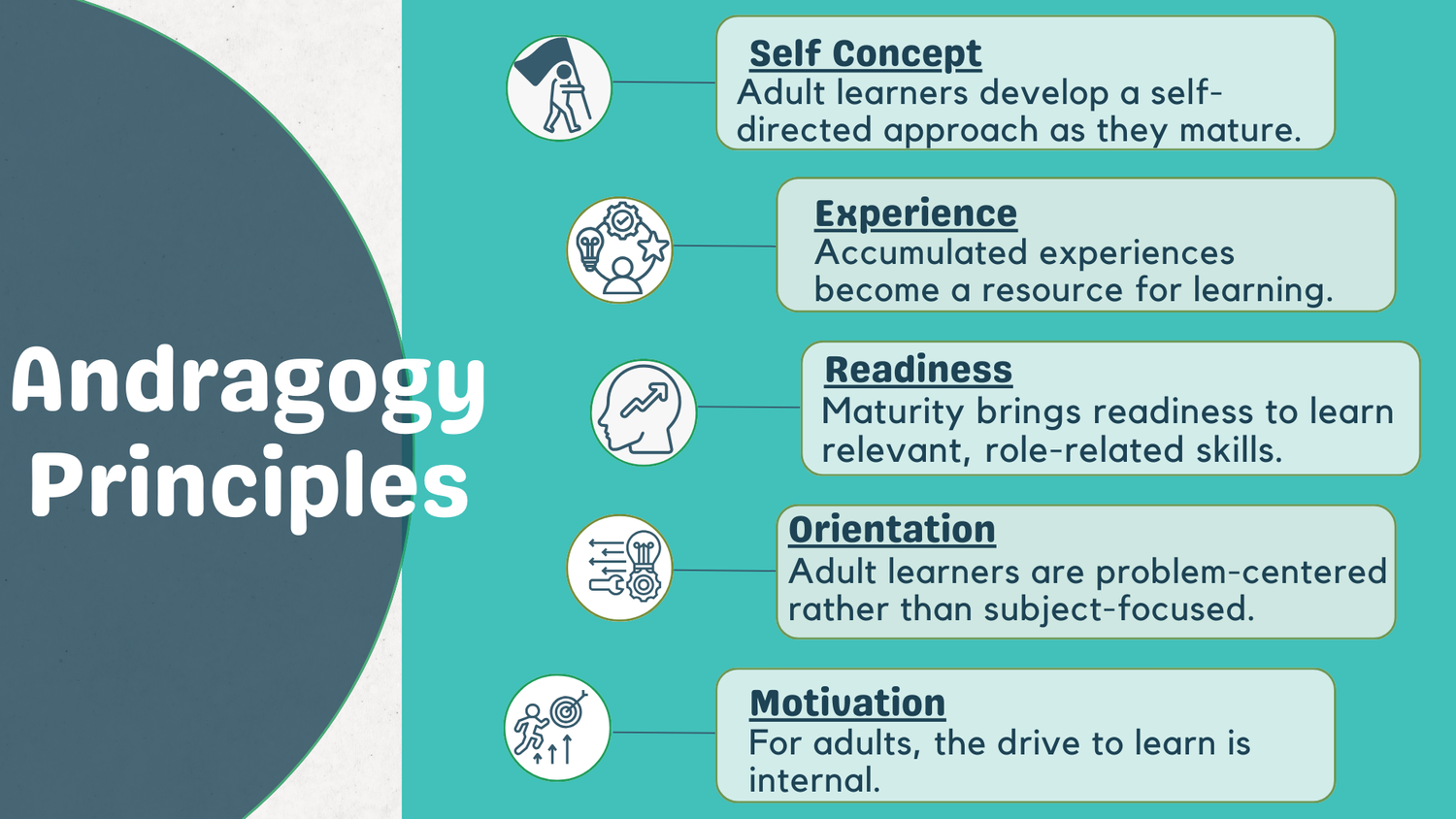
Self-concept is a key principle where adult learners view themselves as self-directed and autonomous. This perspective shapes their approach to learning, emphasizing a need for learning experiences that support their independence and draw upon their existing knowledge and experiences. Consequently, andragogical teaching methods focus on facilitating rather than directing learning, recognizing adults' desire for self-determination in their educational pursuits.
Adult experience is highly valued and considered a rich resource for learning. Adult learners bring a diverse range of life experiences to the educational setting, which can be leveraged to enhance learning through real-world applications and peer learning. This emphasis on experiential learning acknowledges that adults' past experiences significantly shape their learning needs, preferences, and engagement in the educational process.
Readiness to learn is closely aligned with the relevance of learning to an adult's life situation. Adult learners are more motivated and ready to learn when the knowledge or skills are immediately applicable and beneficial to their current roles or personal goals. Therefore, andragogical approaches emphasize timely and practical learning experiences, tailored to adults' evolving social roles and professional demands.
Orientation to learning shifts from a subject-centered approach in traditional education to a problem-centered or task-centered approach in adult learning. Adult learners are predominantly focused on learning that is directly applicable and relevant to solving real-life problems or achieving specific tasks. This orientation influences the design of adult education, prioritizing practical, life-related learning experiences over theoretical or abstract knowledge.
Motivation is primarily intrinsic, with adult learners being driven by internal factors such as personal growth, self-fulfillment, and the relevance of the learning to their life goals and professional advancement. Unlike in traditional education where extrinsic motivators like grades and external approval play a significant role, adults engage in learning activities that they find personally meaningful and beneficial. This understanding of motivation shapes adult education to be more learner-centered, focusing on creating engaging, relevant, and self-rewarding educational experiences.
Reflect on a previous learning experience where you were an adult learner. How did that experience align with or differ from Malcolm Knowles' five principles of andragogy? Provide specific examples to illustrate how these principles were or were not present in your learning experience, and discuss how this impacted your engagement and learning outcomes.