
Workshop Scenario:
Please think of yourself in the following scenario as you complete this workshop.
Are you an independent thinker? Are you frustrated with employment, or have you ever imagined a better way to complete a process? Would you like to be in control of your work environment? Would you like to build something great, something that's YOURS? Have you ever thought of starting your own business?
Your objectives for today will be to assess an appropriate education to become a successful entrepreneur AND develop a presentation for a new business idea you would be interested in pursuing.
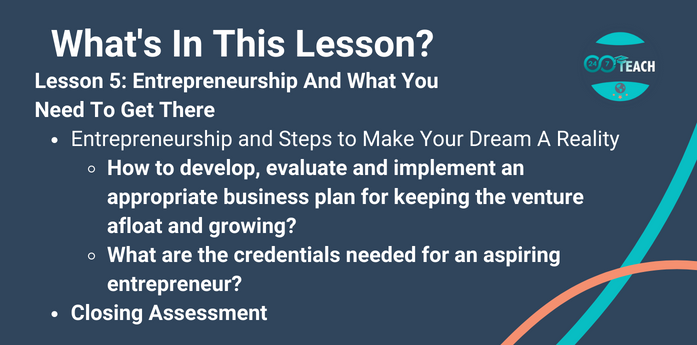
Entrepreneurship and Steps to Make Your Dream A Reality
The entrepreneurial process: considerations for initiating a new (start-up) business venture:
When considering starting a new business, it is important to research the market and industry in which you will be operating. You need to understand your customers’ needs and what solutions your business can offer them. Additionally, it is important to determine the feasibility of your venture. Can you realistically generate enough revenue to cover your costs and make a profit?
Taking these factors into account will help you make the best decision for starting a new business. Important considerations to take into account when starting a new business, including:
1. Researching the market and industry
2. Determining the feasibility of the venture
3. Developing a business plan
4. Securing financing
5. Building a team
6. Marketing and branding the business
7. Launching the business
8. Managing and growing the business
How to develop, evaluate and implement an appropriate business plan for keeping the venture afloat and growing?
A developed business plan is a comprehensive outline of what you plan to achieve and how you plan to achieve it- this includes a clear vision, strategy, and a roadmap. To develop this outline and to stay on course, one must have the discipline to make tough decisions when necessary.
Things to consider include the following:
1. Developing a business plan for your venture. This should include a description of your product or service, your target market, your marketing and sales strategy, your financial projections, and your management team.
2. Evaluating the feasibility of your business plan. Make sure to consider the costs of starting and running your business, the Competition, and the potential for return on investment.
3. Implementing your business plan. Put your plan into action and track its progress over time. Make adjustments as necessary to ensure that your business is on track for success.
What are the credentials needed for an aspiring entrepreneur?
To be an entrepreneur, you need to have knowledge and experience in business and management. You must understand the importance of marketing, sales, and customer service along with the financial side of your business. Entrepreneurs need to be creative and innovative to stay ahead of the competition and make their businesses successful.
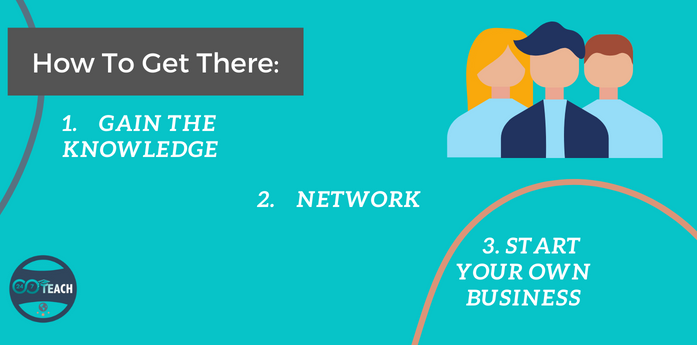
Chances are that you have at least some of these skills, but you may need supplemental knowledge. One way to improve your skills is by taking classes, workshops, internships, and networking. These can be either in person or online, allowing you to learn from experts who have already mastered the topics you’re trying to learn. You can also find courses at local schools and universities that offer continuing education classes for a fee. These options allow you to get hands-on experience and increase your knowledge quickly. Another route often taken is earning a collegiate degree. Unquestionably this is a valuable experience, though it is costly and can take years to achieve.
To gain an indispensable entrepreneurial skillset, you will need to be diligent; it’s essential to challenge yourself often—set goals, and push yourself out of your comfort zone to grow. Skill-building options like boot camp courses and micro-learning environments provide more flexibility and financial freedom. They can offer benefits not provided in an online course or collegiate class, such as:
Flexible learning options that fit your schedule
Mentorship and coaching opportunities to support your journey
Career coaching that will help you prepare for interviews and help you land a job
Coaches should address: The importance of business models; Network Effects; Customer and product discovery process; Financial modeling; Marketing, personal selling, customer acquisition; Pitching to investors; Sales; and Product fit, to name a few.
Having a deep understanding of what businesses need to thrive and becoming business savvy with guidance and support will help you achieve your goals and gain the trust of future investors, customers, and team members!
Closing Assessment:
Now It’s Your Turn to Show What you Know!
Learners will identify a business idea and create a business plan using the information they've learned through this course. When you complete it, this will be a document you can take to a mentor who can help guide you through the necessary steps and provide you with detailed information to make your plan a reality. It will include: who uses it/ creates it, what its purpose is, when is it needed, where can it be effective (in what setting), why this problem is worth solving and tackling, and how pursuing this can change your life and its development change the lives of your customers?
Step 1: Identify a business idea/need— what have you noticed that needs improving? What can you do to make this business/service better?
Step 2: Create a rough business plan remembering key concepts discussed in Lesson 4: Entrepreneurial Process and Developing a Business Plan. To create a business outline, it's helpful to use a template-- we have provided a sample document for you, though be aware that these documents come in many forms and styles.
Step 3: Share with your family and Friends for Feedback.
Get outside feedback– from 3 people giving you their feedback on your business idea. Make sure to listen objectively, as they provide a perspective different from yours. Make adjustments accordingly.
Step 4: Share your business outline with us and receive your certificate of completion. We'd love to see what you've taken away from the course. Please upload your business plan and provide your takeaways through this Google Form.
Project Resources:
Congratulations On Completing Our Introduction To Entrepreneurship Course!
Intrigued By A Career In Entrepreneurship?
 Receive a 5% Discount to register for the 24/7 Entrepreneur Bootcamp. You will Learn Entrepreneurship, Do Entrepreneurship, and Become a professional Entrepreneur with a Job Guarantee . Interested? Then simply click below to learn more. [/caption]
[caption id="" align="alignnone" width="300"]
Receive a 5% Discount to register for the 24/7 Entrepreneur Bootcamp. You will Learn Entrepreneurship, Do Entrepreneurship, and Become a professional Entrepreneur with a Job Guarantee . Interested? Then simply click below to learn more. [/caption]
[caption id="" align="alignnone" width="300"]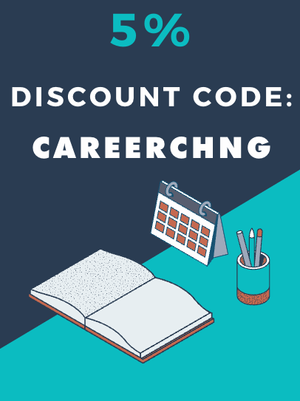 Use the discount code above. [/caption]