
Workshop Scenario:
Please think of yourself in the following scenario as you complete this workshop.
You are a teenager who constantly struggles with expressing yourself, managing your time, and forming meaningful connections. You often find it challenging to convey your thoughts and ideas, leading to frustration and a lack of confidence. Balancing schoolwork, responsibilities, and social interactions feels overwhelming, leaving you yearning for guidance and support.
That's precisely why you made the decision to enroll in 24/7 Teach's Communications and Organization Workshop. You recognized that it's time to tackle these challenges head-on and develop the essential skills to overcome them. By immersing yourself in this workshop, you're taking a proactive step towards personal growth, improved communication, and increased confidence in navigating your daily life.
In this lesson, we will explore the fundamental principles of effective communication and organization specifically tailored for teenagers like yourself.
Your objective for today is:
Demonstrate an understanding of effective communication by identifying and explaining the key components of verbal, non-verbal and written communication.
Important Questions to Consider While Reading:
In order to be successful in this lesson, you must be able to answer these important questions.
What are the different forms of communication? Which do you think you are most skillful at?
Pre-Assessment
Please complete a short test on your communications and organization skills.
Lesson 1: Communication and Organization
Hey there, 24/7 Superstars!
Have you ever thought about how you share your thoughts, ideas, or feelings with others? It's through communication - the superpower we all possess but often don't realize its true potential. Today, we're going to dive into the exciting world of communication!
1.1 Communication - What's That?
Imagine you're playing a game of charades. You're acting out a movie title, but you can't speak. That's tough, right? But with your clever gestures, your team quickly guesses the movie. That, my friend, is communication!
1.2 Communication isn't just about talking. It comes in three awesome forms:
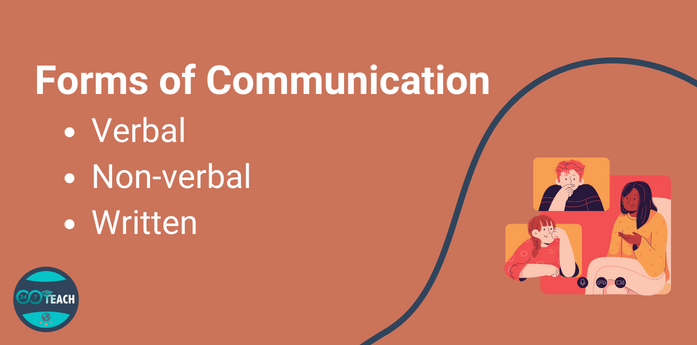
Verbal Communication: This is all about the words we use. For example, telling your friend, "I love your new sneakers!" But it's not just what you say, it's how you say it. The excitement in your voice can tell your friend how much you really love those sneakers.
Non-Verbal Communication: This is everything that doesn't involve words. A thumbs-up, a high-five, a hug, or even rolling your eyes (we've all done it, haven't we?) – these are all ways we communicate without speaking a word.
Written Communication: Ah, the world of emojis, LOLs, and BRBs. Whether you're writing an email, a text message, or a note to your friend, you're communicating in writing. The trick is to be clear and kind – nobody likes a message that's hard to understand or hurtful.
1.3 Active Listening
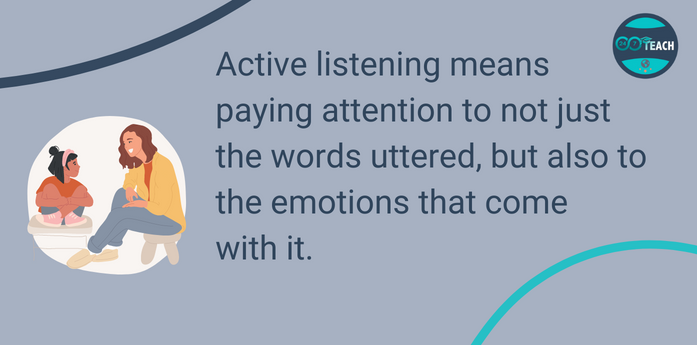
Communication isn't just about talking or writing. It's also about listening – really listening. This is what we call active listening. It's when you're so focused on what someone else is saying that you understand not just their words, but their feelings too. It's like when your friend tells you they're moving away. You can hear the sadness in their voice, and you understand how they feel. That's active listening.
Active listening is super important. It helps you understand others better, avoid misunderstandings, and build stronger friendships. So, the next time someone's talking to you, try to really listen. Show interest, don't interrupt, and ask questions if you don't understand something. It can make a world of difference!
Let’s Practice!
Grab your family or some friends and play "Two Truths and a Lie." Each person tells two true things and one false thing about themselves, and everyone else has to guess the lie. This fun game can help you pay attention to what others are saying (active listening) and look for non-verbal cues. Plus, you might learn something new about each other!
Or try this: pair up with someone and sit back-to-back. One person describes a picture, and the other person tries to draw it based on the description. This game can show you how important clear communication is. Plus, the results can be hilarious!
In conclusion:
So there you have it! Communication is more than just talking; it's about understanding and sharing ideas. It's about listening and connecting with others. And remember, like any superpower, communication takes practice. So, don't be afraid to express your thoughts and listen to others. You'll be a communication superhero before you know it!
Until next time, keep communicating, and stay awesome!
Closing Assessment:
Select the Assessment button below to answer the following questions:
Try to notice the different ways you communicate. Are you more of a talker? Listener? Do you use loads of emojis in your text? Share your observations about yourself.
Discussion Question:
1. Please answer the following question in the comment section below and interact with learners from around the world.
Can you think of situations where your intended message was misunderstood due to misaligned verbal, non-verbal, or written communication? How did you manage the situation?
2. Please read and reply to other learners’ answers in the forum. Your replies should offer new substantiated ideas or thoughtful questions.