
Workshop Scenario:
Please think of yourself in the following scenario as you complete this workshop.
You are a teenager who constantly struggles with expressing yourself, managing your time, and forming meaningful connections. You often find it challenging to convey your thoughts and ideas, leading to frustration and a lack of confidence. Balancing schoolwork, responsibilities, and social interactions feels overwhelming, leaving you yearning for guidance and support.
That's precisely why you made the decision to enroll in 24/7 Teach's Communications and Organization Workshop. You recognized that it's time to tackle these challenges head-on and develop the essential skills to overcome them. By immersing yourself in this workshop, you're taking a proactive step towards personal growth, improved communication, and increased confidence in navigating your daily life.
In the previous lesson, you were able to explore and apply tips in writing an effective emails. You also learned a number of tips on how to make any written communication more efficient.
In this lesson, we will venture into another macro skill which is most of the time neglected by many - listening. We will dive deeper in active listening and apply practical tips on how to become a good listener.
Your objective for today is:
Understand the power of active listening and its impact on building stronger connections, improving relationships, and becoming better communicators, and practice and apply active listening techniques in daily interactions to enhance interpersonal skills.
Important Questions to Consider While Reading:
In order to be successful in this lesson, you must be able to answer these important questions.
What is the "superpower" discussed in the reading, and why is it considered a game-changer?
How does active listening differ from merely hearing words, and what are some benefits of actively engaging in this skill?
Why is practicing active listening challenging, and how can students like you take this skill to the next level in your everyday interactions to strengthen your relationships with others?
Lesson 5: The Superpower of Listening
Hey there 24/7 Teach! Today, we will be talking about a superpower that you might not even know you have. It's not the ability to fly or become invisible - it's the power of listening. Now, you might be thinking, "Listening? That's a superpower?" But trust us, it really is! And once you master it, you'll see how it can totally transform your life.
5.1 Why Active Listening is a Game-Changer
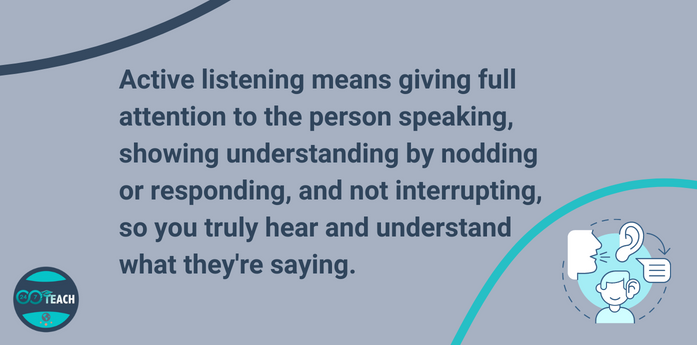
First, let's talk about what active listening actually means. It's not just about hearing the words someone is saying. It's about really understanding what they're trying to tell you. It's about paying attention, showing empathy, and responding in a way that shows you care.
Active listening can help you in so many ways. It can improve your relationships, help you do better in school, and even make you a better friend. Plus, people really appreciate when they feel heard and understood. So, if you want to impress your teachers and make your friends feel valued, active listening is the way to go!
5.2 How to Be a Better Listener
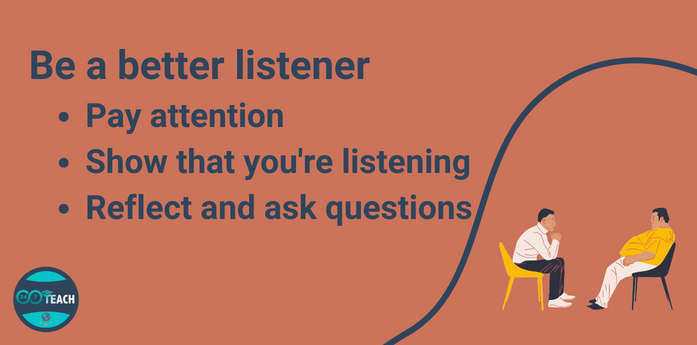
Ready to become a master listener? Here are some techniques to help you out:
Pay Attention: This might seem obvious, but it's so important. When someone is talking to you, really focus on what they're saying. Try to block out other distractions and give them your full attention.
Show That You're Listening: Use your body language to show that you're engaged. Nod your head, maintain eye contact, and use facial expressions to respond to what they're saying.
Reflect and Ask Questions: Repeat back what they've said in your own words to make sure you've understood correctly. And don't be afraid to ask questions if something is unclear!
5.3 The Art of Listening: More Than Just Hearing
So, we've talked about what active listening is and how it can help us. But I want to dive a little deeper and explain why this skill is so unique and powerful. You see, when we actively listen, we're doing more than just hearing words. We're connecting with the person who's speaking on a much deeper level.
Think about a time when you were really excited about something and wanted to share it with someone else. Maybe it was a new game you played, a cool movie you watched, or an awesome book you read. Remember how it felt when the person you were talking to really listened to you, asked questions, and showed genuine interest in what you were saying? It felt pretty good, right?
That's the power of active listening. It helps us build stronger connections with the people around us. It makes us feel valued and understood. And it makes us better communicators, too, because when we listen well, we learn how to express ourselves better.
5.4 Practice Makes Perfect
Now, we won't lie to you. Active listening isn't always easy. Sometimes, it can be really hard to focus and pay attention, especially when we have a million other things on our mind. But like any skill, it gets easier with practice.
That's why our listening skills activity is so important. It gives us a chance to practice active listening in a safe, fun environment. And remember, it's okay if you don't get it right the first time. The important thing is to keep trying and to learn from your mistakes.
Let’s Practice!
As you practice your active listening skills, I want to challenge you to take it to the next level. Don't just use this skill when you're doing the activity or in class. Use it in your everyday life.
Next time you're having a conversation with a friend or family member, try to really listen to what they're saying. Show them that you're interested and that you value what they have to say. Trust me, they'll appreciate it, and you'll find that your relationships will become even stronger.
Closing Assessment:
Select the Assessment button below to answer the following questions:
Explain the impact of active listening on relationships.
How can active listening make you a better communicator?
Describe a situation where active listening can be particularly beneficial.
Discussion Questions:
1. Please answer the following questions in the comment section below and interact with learners from around the world.
How can you apply active listening skills in your everyday life?
What challenges have you faced when trying to actively listen and how can you overcome them in the future?
Share a situation where you wish you had practiced active listening. How would it have changed the outcome?
2. Please read and reply to other learners’ answers in the forum. Your replies should offer new substantiated ideas or thoughtful questions.