
Workshop Scenario
Please think of yourself in the following scenario:
You are a student or young professional who is passionate about making a difference in your community. You have a strong desire to lead and make an impact, but you're not sure where to start. You've noticed that many of the leaders in your community are not very effective, and you don't want to make the same mistakes.
In this scenario, learning about leadership can provide you with the knowledge, skills, and inspiration you need to positively impact your community. Whether you want to grow personally, advance your career, or make a difference in the world, learning about leadership can help you achieve your goals.
In this lesson, you will learn strategies for building and managing a team while fostering collaboration and teamwork.
At the end of the workshop, you will submit a plan for leadership as your final project. You will work on this plan throughout the workshop, and add to it at the end of every lesson.
At this point in the workshop, you have a solid understanding of what kind of leader you want to be and how to accomplish that. Now, you will develop your skills in motivating and inspiring teams as a leader by fostering collaboration and teamwork. How will you handle conflicts? How will you inspire growth?
Lesson Objectives:
By the end of this lesson, you will be able to:
Analyze the key principles of team building and apply them to a hypothetical scenario to develop an effective team.
Evaluate the stages of team development and develop strategies for overcoming potential conflicts during each stage.
Create a plan for developing leadership skills in others, including mentoring and coaching strategies and opportunities for team members to take on leadership roles.
Before we dive into the topic, let’s start by asking ourselves a few questions:
What are some of the key elements in building a successful team?
How can leaders encourage collaboration and teamwork within their team?
What are some effective strategies for developing leadership skills in others?
Take a moment to reflect on these questions and jot down your answers. As we go through the lesson, you will have the opportunity to reflect on and further develop your own thoughts and understanding of leadership.
Lesson 4: Leading Teams
Leadership is about inspiring and guiding others to achieve a common goal. A leader who is able to build and manage a strong and cohesive team can accomplish great things.
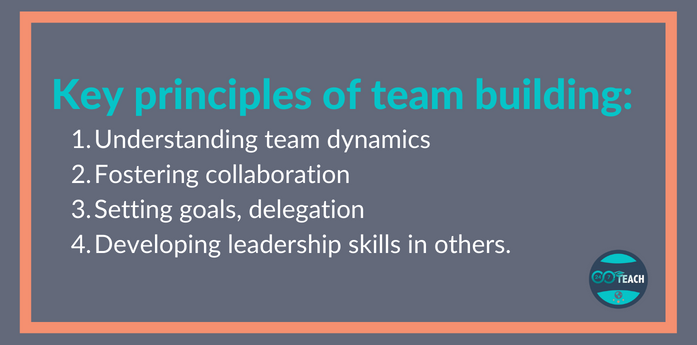
In this lesson, we will discuss the key principles of team building:
Understanding team dynamics
Fostering collaboration
Setting goals, delegation
Developing leadership skills in others.
Building and Managing a Team
The first step in building and managing a team is to identify the members' strengths and weaknesses. A leader should take the time to get to know each team member, understand their skills and talents, and find ways to utilize them effectively. By doing so, the leader can ensure that each team member feels valued and has a clear role in the team.
Once the team is assembled, it is important to establish clear goals and objectives. A leader should communicate these goals to the team and ensure that everyone is on the same page. This will help keep the team focused and motivated as they work towards their common goal.
The leader should also encourage open communication among team members. Encourage team members to share their ideas and opinions, and provide a supportive environment where everyone feels comfortable to express themselves. This will foster a sense of collaboration and teamwork, and help to build trust and respect among team members.
Understanding Team Dynamics
In any team, there will be different personalities and perspectives. Understanding these differences and how they impact the team is essential for successful leadership. For example, some team members may be more introverted, while others are more extroverted. Understanding these differences can help the leader create an environment that allows everyone to contribute effectively.
Additionally, leaders should be aware of the stages of team development. Teams typically go through a series of stages, including forming, storming, norming, performing, and adjourning. Understanding these stages can help the leader identify potential issues and find ways to overcome them. For example, during the storming stage, conflicts may arise as team members work to establish their roles and responsibilities. The leader should be aware of these conflicts and find ways to resolve them before they escalate. This will be easy if the leader works to lead him or herself first, before leading others
Fostering Collaboration and Teamwork
Collaboration and teamwork are critical to the success of any team. A leader should encourage team members to work together, share ideas, and support each other. This can be done by setting up regular team meetings, encouraging open communication, and promoting a positive and inclusive work environment.
The leader should also provide opportunities for team members to build relationships outside of work. For example, organizing team-building activities or social events can help team members get to know each other on a personal level and foster a sense of camaraderie. This will make it easier for them to work together effectively and build trust and respect.
Consider the following scenario:
You are building a small team and need to find the most appropriate positions for your new team members. Complete the activity below to see how much you understand about building a strong team.
Setting Goals and Delegation
Effective leaders understand the importance of setting clear goals and delegating tasks effectively. Leaders should work with the team to establish specific and measurable goals and then delegate tasks to team members based on their strengths and abilities. This will help to ensure that the team is working towards the same goal and that everyone is contributing effectively.
It is also important to set clear expectations for each team member. The leader should provide clear guidance on what is expected of each team member and how they will be held accountable. This will help to ensure that everyone is working towards the same goal and that the team is functioning effectively. A leader is accountable for their actions, their team, and their results.
Developing Leadership Skills in Others
Finally, leaders should strive to develop leadership skills in others. This can be done by providing opportunities for team members to take on leadership roles, mentoring and coaching, and encouraging them to take on new challenges and responsibilities.
For example, the leader can assign a team member to lead a project or task and provide guidance and support as needed.
Closing Assessment
It’s time to work on your leadership plan. Please open up your leadership plan document, and answer questions 13-17.
Advance your understanding by participating in the 24/7 Discussion Forum:

1. Please choose one question below to answer in the comment section below and interact with learners from around the world.
What do you think is the most vital element of building a successful team ?
Describe a time you were asked to collaborate on a team. Were the methods of encouraging collaboration effective?
2. Please read and reply to other learners’ answers in the forum. Provide feedback, thoughts, or questions. Your replies should offer new substantiated ideas or provoke thoughtful discussion.
Course created by Samantha Nally and Rob Grillot