
Workshop Scenario
Please think of yourself in the following scenario:
You are a student or young professional who is passionate about making a difference in your community. You have a strong desire to lead and make an impact, but you're not sure where to start. You've noticed that many of the leaders in your community are not very effective, and you don't want to make the same mistakes.
In this scenario, learning about leadership can provide you with the knowledge, skills, and inspiration you need to positively impact your community. Whether you want to grow personally, advance your career, or make a difference in the world, learning about leadership can help you achieve your goals.
In this lesson, you will learn how to implement change as a leader.
At the end of this lesson, you will submit your plan for leadership as your final project.
Finally, you have a clear understanding of what it takes to be a leader. Now it’s time to think about how you will implement change as a leader. What is your strategy? How will you overcome resistance?
Lesson Objectives:
By the end of this lesson, you will be able to:
Identify the key principles of leading change.
Explain the steps involved in developing a change strategy, and describe how this strategy can help overcome resistance to change.
Develop a plan to build a culture of continuous improvement within a hypothetical organization, including specific strategies for encouraging innovation, providing opportunities for training and development, and recognizing and rewarding team members.
Before we dive into the topic, let’s start by asking ourselves a few questions:
How can leaders support their team through the various stages of change?
What are some effective strategies for overcoming resistance to change?
How can leaders encourage innovation and creativity while also promoting a culture of continuous improvement?
Take a moment to reflect on these questions and jot down your answers. As we go through the lesson, you will have the opportunity to reflect on and further develop your own thoughts and understanding of leadership.
Lesson 5: Leading Change
Leading change is a critical component of effective leadership. In today's rapidly changing world, leaders must be able to navigate and guide their organizations through significant changes to remain competitive and successful.
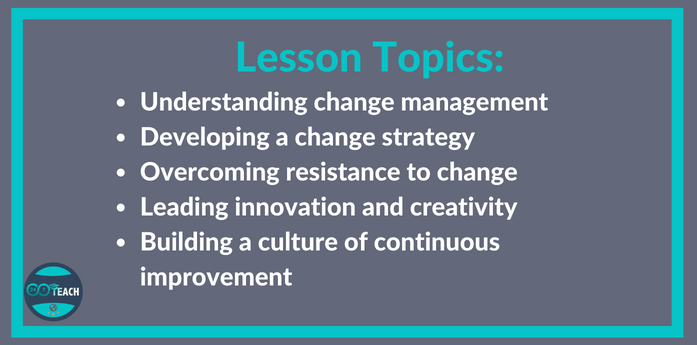
In this lesson, we will discuss the key principles of leading change, including
Understanding change management
Developing a change strategy
Overcoming resistance to change
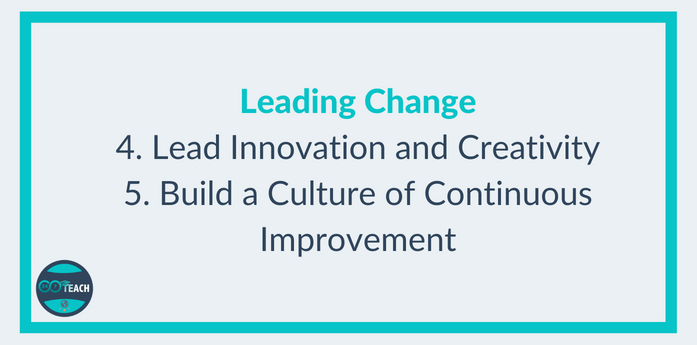
Leading innovation and creativity
Building a culture of continuous improvement.
Understanding Change Management
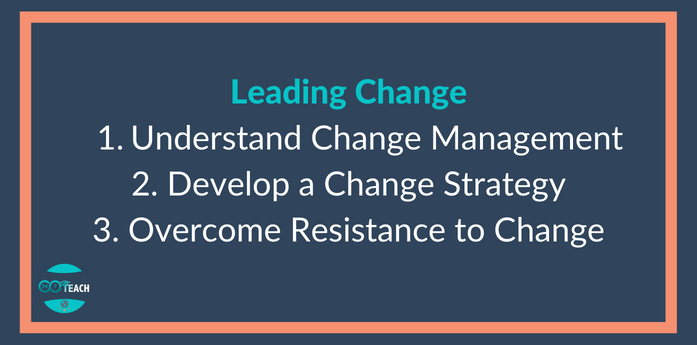
Change management is the process of preparing and supporting individuals and organizations through changes. Effective change management involves understanding the motivations and needs of all stakeholders and developing a strategy that addresses those needs. As a leader, it's important to understand the impact of change on yourself and your team and to have a plan in place to effectively manage it.
Developing a Change Strategy
Once you understand the impact of change, the next step is to develop a change strategy. This involves identifying the specific changes that you want to make, understanding the reasons for those changes, and developing a plan to make them happen. Your change strategy should include specific goals, timelines, and a plan for communicating the changes to others.
Overcoming Resistance to Change
Resistance to change is a natural part of the change process. Effective leaders understand this and take steps to overcome resistance by involving all stakeholders in the change process, addressing their concerns and fears, and providing regular updates and communication. Leaders should also provide opportunities for team members to provide feedback and to participate in decision-making processes related to the change.
Take a moment to reflect:
Have you ever had to make a change in your life? At school, work, in your community or even in your family? Tell us about it. Include any obstacles you had to overcome to implement that change. Keep this situation in mind as you continue to read about leading change.
Leading Innovation and Creativity
Innovation and creativity are key drivers of success in today's rapidly changing world. Effective leaders encourage innovation and creativity by creating a supportive work environment that encourages risk-taking and experimentation. This can be done by providing opportunities for team members to try new things, encouraging them to challenge the status quo, and recognizing and rewarding innovative ideas and actions.
Building a Culture of Continuous Improvement
Finally, effective leaders build a culture of continuous improvement. This involves creating a work environment that supports and encourages continuous learning and growth. A culture of continuous improvement encourages team members to continuously seek out new information, explore new ideas, and take risks.
To build a culture of continuous improvement, leaders should provide opportunities for training and development, encourage open communication, and recognize and reward team members for their efforts. Additionally, leaders should continuously seek out new information, explore new ideas, and take risks themselves. By doing so, leaders model the behavior they want to encourage in others and create a culture that supports continuous growth and development.
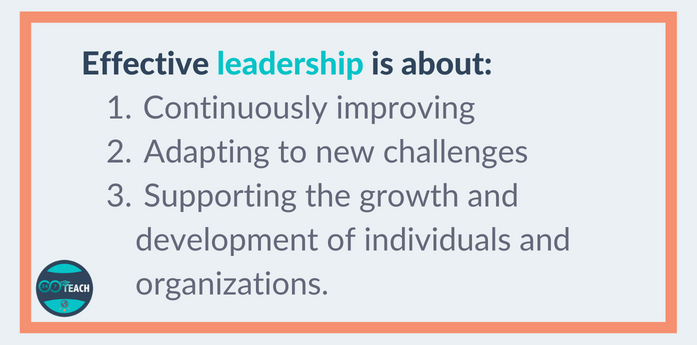
Effective leadership is about:
Continuously improving
Adapting to new challenges
and Supporting the growth and development of individuals and organizations.
In conclusion, leading change is a critical component of effective leadership. By understanding change management, developing a change strategy, overcoming resistance to change, leading innovation and creativity, and building a culture of continuous improvement, leaders can navigate and guide their organizations through significant changes to remain competitive and successful.
Also, remember:
Great leaders make great decisions. Learn effective decision-making skills.
Great Leaders focus on the process first and the outcomes second.
Great Leaders know the specific points to concentrate on and dominate.
Great Leaders are intentional and dominate in their preparation - You play how you practice.
Great leaders develop intentional plans of action.
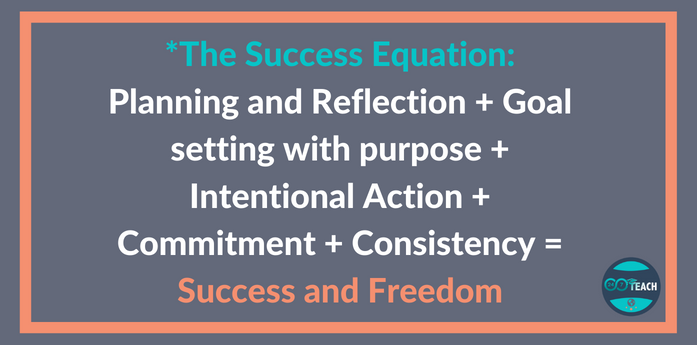
Great leaders use the Success Equation* to be successful
Final Leadership Readiness Quiz
Complete the Leadership Readiness Quiz and see how much you’ve learned and grown from this workshop!
Final Project
It’s time to submit your leadership plan. Please open up your leadership plan document, and answer questions 18-20.
Then, reply to the email you received this course from with your leadership plan attached. You will receive feedback and a certificate of completion!
Advance your understanding by participating in the 24/7 Discussion Forum:
1. Please answer the following question in the comment section below and interact with learners from around the world.

Name a time when a leader in your life encouraged innovation and creativity. Did you like their method? Defend your answer with information from the lesson.
2. Please read and reply to other learners’ answers in the forum. Provide feedback, thoughts, or questions. Your replies should offer new substantiated ideas or provoke thoughtful discussion.
Course created by Samantha Nally and Rob Grillot