Workshop Scenario:
Please think of yourself in the following scenario as you complete this workshop.
You’ve recently applied for a Junior Digital Marketing position with 24/7 Teach. The organization likes you and has given you a basic marketing project to complete before they hire you.
The project requires you to create buyer personas for their Teen Programs.
In order to complete the project, you will have to develop a buyer persona presentation that will be presented to the Vice President of Marketing.
Your objective for today is to learn the importance of Digital Marketing Strategies and the steps to implement one.
Important Questions to Answer While Reading:
In order to be successful in this lesson, you must be able to answer these important questions.
What is a Digital Marketing Strategy, and why is it important to have one?
What steps are involved in developing and implementing a Digital Marketing Strategy?
How to analyze results from your Digital Marketing Strategy?
Today, the majority of our content consumption takes place in the digital world. To keep up with our reliance on technology, marketing has also gone digital. This shift requires your brand to have a presence in the digital world in an impactful way. In order to build a successful digital presence for your brand or your clients, you need to have a solid digital marketing strategy.
What exactly is a digital marketing strategy?
A digital marketing strategy is a step-by-step, actionable process that works towards achieving the digital marketing goals of your company or your clients.
As mentioned in previous lessons Digital marketing is accomplished through digital marketing channels. These channels include social media, digital publishing, and paid, earned or owned media.
A digital marketing strategy involves a very deliberate decision-making process regarding your digital marketing goals and the most appropriate channels that will help you achieve them.
A Digital Marketing strategy encompasses 7 clear steps:
Set a goal
Evaluate your existing digital marketing presence
Understand the digital sales funnel
Build buyer personas
Locate your customers on the funnel
Create a content plan
Analyze results
7 steps to building a digital marketing strategy
Here are the fundamental steps to building a solid digital marketing strategy for your brand:
1. Set a goal
Before you start strategizing, you must ask yourself what it is that you hope to achieve with your marketing strategy. It sounds simple, but this step requires you to come up with a very detailed and specific set of goals.
Your goals need to lead you to specific actions to achieve them.
To do this, you can use the SMART criteria.
SMART is a very helpful and commonly used mnemonic tool for setting objectives. SMART offers the following criteria for setting goals:
Specific
Measurable
Attainable
Relevant
Timely goals
Acquiring more views on your website is not a SMART goal.
Generating 10% more visits to your website through ads on X social media platform for the next two months is a SMART goal. All the SMARTer when you outline the exact steps you’ll take to get there.
2. Evaluate your existing digital marketing presence
Even if it’s close to nonexistent, it’s good to understand what you have already accomplished. This step will help you understand what to focus on to achieve your current goals.
Before you start building your digital marketing strategy, you need to know your digital presence.
First, you need to understand your main marketing channels:
Your website
Social media
Email marketing
Content marketing/SEO
Pay-per-click advertising
Which of these is driving the most leads and traffic to you? Rank each channel and specific media from most effective to least effective (thus far).
3. Understand the digital sales funnel
The digital sales funnel is the arc of your buyer’s journey from stranger to a repeat, or long-term customer. A brand with a strong digital presence can use the funnel to achieve its digital marketing goals. How? By addressing each step of the funnel with the appropriate digital marketing tools.
Understanding the digital sales funnel means that you need to grasp each stage of the funnel and the appropriate digital tools that complement it.
Here is a simplified breakdown of the stages and the appropriate digital marketing responses.
Awareness
Make potential clients aware of your existence. For example, through ads on social media or ranking well in search engines.
Interest
Raise interest in your brand. Who are you, and what sets you apart from your competition? Some common digital tools for this stage are features about your brand in digital publications and videos.
Engage
Solidify your relationships. Sponsored posts on social media that address concerns the client could have or encourage them to ask questions are great tools for this stage.
Action
Do business with the client. A tool for this stage is implementing calls-to-action for the client to make a purchase. For example, incentivizing a purchase by offering discounts in ads or emails for the client.
4. Build buyer personas
You need to know who your audience is before you attempt to successfully reach out to them. So how can you understand who your audience is?
Put yourself in your customer’s shoes. Once you can imagine who a person is, then you can make some assumptions about what would appeal to them.
Create a narrative: Where does this person shop? What does this person read? Which marketing channels can you find them on?
Get specific. What do they need? What are their preferences? How can you meet (or surpass) their expectations?
Customer example: Trevor, 26, values experiences over things. He doesn’t own a car. He’s “the expressionist” who prefers to buy unique items and doesn’t want to look like everyone else.
Do your research using analytics services.
5. Locate your customers on the funnel
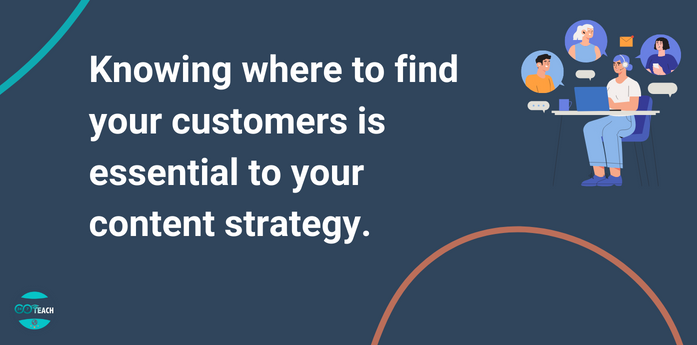
You then have to locate your customers at different stages of the funnel. In all likelihood, there will be customers at all stages of the funnel who are open to connecting with you.
For example, let’s say your product is an organic deodorant. Your prospective customer may be:
Someone who does a Google search for organic deodorants and ends up reading an article that features you.
Someone who’s looking to buy a deodorant that is organic and zero waste and sees your sponsored Facebook post about how your deodorant is made of compostable packaging.
Some who has already purchased your deodorant and who you now include in an email campaign featuring an option to buy your deodorant at a discounted price.
Once you have this information, you can begin to target distinct groups of customers through different channels.
6. Create a content plan
At this stage, you should have all the necessary information to start planning Illustration by AEAE
At this stage, you will develop a specific marketing strategy for every channel that attracts your customers. What sort of content do you need to achieve your digital marketing goals for each of these channels?
Your strategy will be made up of a series of actions that respond to specific goals. It will also have a specific timeline so that the actions can have measurable deadlines.
Some of these actions will be:
Developing a keyword strategy: identifying important keywords to improve SEO.
Creating a content calendar:
This will allow you to have long-term and easily traceable goals. Your content calendar will be very specific. Each actionable item will include (at least) author, publication date, keywords, topic and potential tags.
There should be a digital marketing goal for each month. For example, starting in January, you will feature bi-weekly posts on your blog on a specific theme.
Posting on social media: use research you’ve conducted to ascertain what sort of content you should post on which social media channels and how often you should do so.
Using CTA’s and widgets: it is crucial to include CTAs and widgets in your digital marketing content to allow customers to easily engage with you and your products.
Marketing automation tools: Once you have your content strategy down, these tools are a great way to save time and be efficient.
7. Analyze results
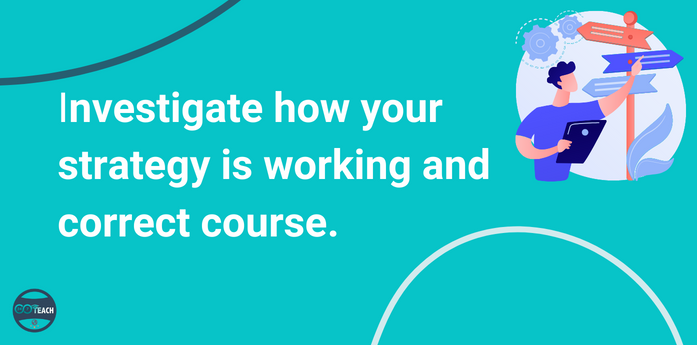
Once you have a strategy in place, practice this step at intervals (add it to your calendar). How are customers interacting with what you’re sharing with them? How are you progressing toward your goals? These analytics will help you correct course and learn from things that didn’t work out as planned.
By using analytics software, you can observe your progress at different stages of the funnel.
You want to understand:
If clicks are turning into conversions. Is there mobility across the funnel? Why or why not?
If there is a point where you’re losing engagement with customers. What’s the reason and how can you fix it?
What’s working well—and what’s not.
Keep up with the latest digital marketing tools, there might be something new on the market that addresses your analysis needs perfectly.
With the results you gather, you can create graphics using data visualization tools which will help with comparisons, goal tracking and presentations.
Closing Assessment:
Please respond to the lesson email with answers to the following questions, and one of our digital marketing mentors will respond with feedback.
What is a Digital Marketing Strategy, and why is it important to have one?
What steps are involved in developing and implementing a Digital Marketing Strategy?
How to analyze results from your Digital Marketing Strategy?
Advance your understanding by participating in the 24/7 Discussion Forum:

1. Please answer the following question in the comment section below and interact with learners from around the world.
Which of the 7 Digital Marketing Steps would be the hardest and the easiest for you to implement and why?
2. Please read and reply to other learners’ answers in the forum by stating if you agree or disagree with their answers and why. Your replies should offer new substantiated ideas or thoughtful questions.
Coming in the Next Lesson:
In Lesson #5 tomorrow, we will look at buyer personas to get you prepared to complete your end of workshop project.
See you tomorrow.
Here’s to learning, creating, and changing the world!
PS - Want to complete an exciting project with what you just learned, get real-world experience, and work directly with a mentor and career coach? Click below to learn more about our Digital Marketing boot camp.
“You haven’t learned anything until you can create value with it”
Ready to do Digital Marketing for real and become Career Ready?
Intrigued by a career in digital marketing? We have a Digital Marketing Bootcamp that will take you from complete beginner to job-ready digital marketer. Interested? Then simply click below to learn more.