
Workshop Scenario:
Please think of yourself in the following scenario as you complete this workshop.
You are a teenager who constantly struggles with expressing yourself, managing your time, and forming meaningful connections. You often find it challenging to convey your thoughts and ideas, leading to frustration and a lack of confidence. Balancing schoolwork, responsibilities, and social interactions feels overwhelming, leaving you yearning for guidance and support.
That's precisely why you made the decision to enroll in 24/7 Teach's Communications and Organization Workshop. You recognized that it's time to tackle these challenges head-on and develop the essential skills to overcome them. By immersing yourself in this workshop, you're taking a proactive step towards personal growth, improved communication, and increased confidence in navigating your daily life.
In the previous lesson, you learned about the different tips on how to be more organized. You also explored the benefits of organization, and how it could improve your personal life, career path, and relationships. Designing your own planner also helped you have a guide tailored to your specific needs.
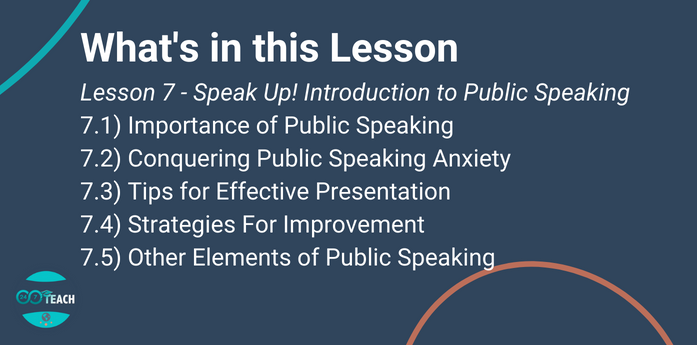
In this lesson, we will talk about public speaking and study strategies that would be useful to teenagers like yourself.
Your objective for today is:
Deliver effective and engaging public speeches by employing storytelling techniques, using confident body language, and understanding the importance of listening to their audience's feedback.
Important Questions to Consider While Reading:
In order to be successful in this lesson, you must be able to answer these important questions.
Why is public speaking considered an essential skill in various aspects of life, beyond formal settings like political speeches or TV hosting?
How can public speaking anxiety be managed effectively, and what techniques are suggested to build confidence in delivering presentations?
How do elements like storytelling, body language, and active listening contribute to making a public speech more engaging and impactful?
Lesson 7: Speak Up! A 24/7 Superstar’s Intro to Public Speaking
Hey there, Superstars! Today, we’re diving into the fascinating world of public speaking. You're probably thinking, "Do I need to learn about this? Isn't it for politicians or TV hosts?" Absolutely not! Whether you're presenting a class project, speaking in a school assembly, or even sharing your ideas during a casual conversation, public speaking is a skill that you'll find useful throughout your life.
7.1 The Importance of Public Speaking
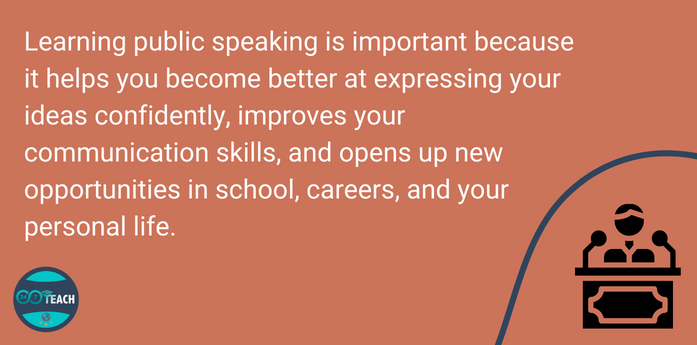
First, let's explore why public speaking is so important. It's not just about being the loudest voice in the room or speaking at the United Nations. It's about sharing your ideas and being heard. It's about engaging and connecting with people, understanding them, and making them understand you. Whether you're chatting with your friends, presenting in class, or speaking at a family gathering, you're using public speaking skills. So why not get better at it?
7.2 Conquering Public Speaking Anxiety
It's totally normal if the thought of speaking in front of others makes your palms sweaty. That's called public speaking anxiety; even the most seasoned speakers sometimes feel it! The key is learning to manage it.
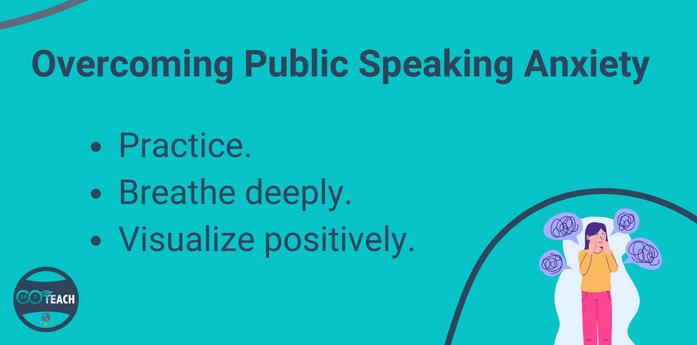
Here are a few techniques to try:
Practice: The more you practice your speech, the more confident you'll feel delivering it. Use your mirror, your pet, or even a stuffed animal as your audience.
Deep Breathing: Before you start speaking, take a few deep breaths. It helps calm your nerves and gets you ready to take on the world!
Positive Visualization: Imagine yourself giving a successful presentation. Seeing it in your mind helps make it a reality.
7.3 Tips for Effective Presentations
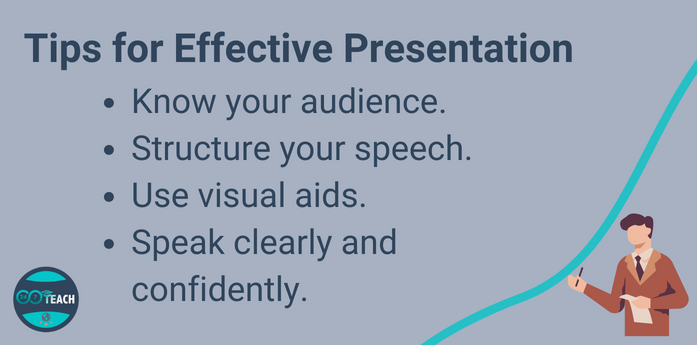
Regarding public speaking, preparation is king (or queen!). Here are some tips to make your presentations effective:
Know Your Audience: Think about who you’re talking to. What do they care about? What do they want to learn? The more you understand your audience, the more you can tailor your presentation to them.
Structure Your Speech: Have a clear beginning, middle, and end. Make sure your points flow logically and each supports your main idea.
Use Visual Aids: Pictures, graphs, or even props can make your speech more interesting and help your audience remember your points.
Speak Clearly and Confidently: Use a strong, clear voice. Make sure you're pronouncing your words correctly and not rushing.
Okay, now that we've covered the basics of public speaking and your exciting homework assignment, let's delve a bit more into some other elements of good public speaking that can take your presentations to the next level.
Embrace Storytelling
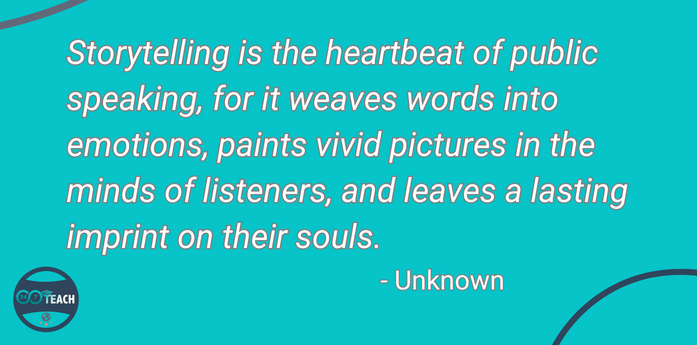
You might be wondering, “What does storytelling have to do with public speaking?” Well, quite a lot, actually! Our brains are wired to enjoy stories. When you weave your presentation around a story, you engage your audience's attention more effectively. It can make your speech more memorable and impactful. So, next time you have a topic, think about how you can turn it into a story.
The Power of Body Language
Ever noticed how you can often tell what a person is feeling just by looking at them, even if they don't say a word? That's the power of body language. When you're speaking in public, your body language can help convey your message more effectively. Stand tall, make eye contact, and use your hands to express your points. Just be sure to keep it natural and comfortable.
The Importance of Listening
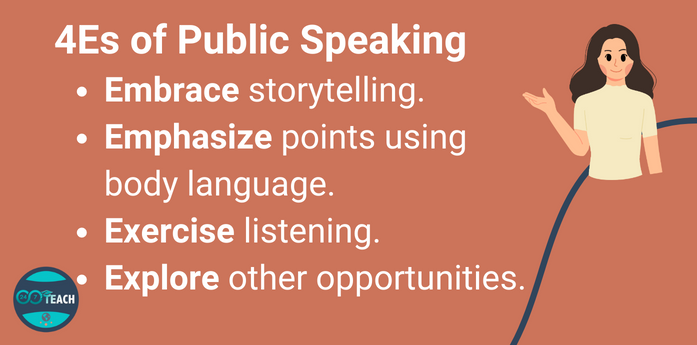
Believe it or not, public speaking isn't just about speaking. It's also about listening. Being attentive to your audience’s reactions, body language, and feedback can help you adjust your presentation as you go and make it more engaging. Plus, being a good listener will also make you a better speaker.
Beyond the Classroom to the Stage
Public speaking isn't just a skill for the classroom. It's a life skill! It can help you express your ideas more clearly, make you more confident, and even open up new opportunities. You might find yourself leading a team project, speaking at a community event, or who knows? Maybe one day, you'll be the one giving a TED Talk!
So, keep practicing, keep exploring, and remember that every great speaker was once a beginner, just like you.
Let’s Practice!
Think of a speaker you admire.
What makes their presentations engaging?
Can you incorporate any of their techniques into your own speeches?
How can you use body language to enhance your public speaking?
Why do you think listening is an important part of public speaking?
The journey to becoming an effective public speaker can be exciting, empowering, and fun. So, embrace the challenge, unleash your potential, and let your voice be heard. We can't wait to see what you'll share with us next time.
Keep speaking up and shining on!
Closing Assessment:
Answer the following questions through a video explanation. Enhance your response with visuals and submit the video link below.
What are three techniques to manage public speaking anxiety?
How can visual aids enhance a presentation?
Can you explain the importance of structuring a speech with a clear beginning, middle, and end?
Discussion Question:
1. Please answer the following questions in the comment section below and interact with learners from around the world.

Can you think of a time when you used public speaking skills in your everyday life? How did it go?
Why do you think people get anxious about public speaking? How can understanding this help manage anxiety?
How might knowing your audience help you prepare for a presentation?
2. Please read and reply to other learners’ answers in the forum. Your replies should offer new substantiated ideas or thoughtful questions.